
A commercial entrance looks simple until it starts causing daily problems. A heavy door slows customers down. A poor threshold makes access awkward. A badly specified automatic system can lead to draughts, delays, safety concerns and unexpected maintenance costs.
For businesses in Ireland, commercial entrance doors are not just about appearance. They affect accessibility, security, fire safety, energy performance and the way people move through your premises every day. A shopfront, office reception, medical centre, supermarket or hotel entrance will all need different solutions.
This guide explains eight key decisions to make before requesting a commercial entrance installation quote, so you can brief your installer clearly and compare prices properly.
Understand how the entrance will be used
The best entrance design starts with people, not products.
Before choosing manual doors, automatic entrance doors or a glass commercial entrance, think about how the entrance works on a normal day. Is it used by customers, staff, couriers or all three? Does traffic arrive steadily, or do queues form at peak times? Will people be carrying bags, pushing trolleys or using mobility aids?
A small office may need a secure, professional entrance with controlled access. A pharmacy or clinic may need smooth, hands-free access throughout the day. A hotel or showroom may place more focus on appearance and first impressions.
The clearer your brief, the more accurate your quote will be.
Check planning and building control considerations
Not every entrance replacement needs planning permission, but you should not assume that commercial entrance installation is always a straightforward door swap.
If the work changes a shopfront, affects a protected structure, sits within an Architectural Conservation Area or alters the way people enter and leave the building, you may need advice before ordering. Fire safety, disability access and commencement notice requirements may also be relevant depending on the project.
You do not need to become a building regulations expert, but you do need to know when to involve one. Speak with your architect, assigned certifier, access consultant, fire consultant or local authority if the entrance affects access, escape routes or the external appearance of the building.
Choose the right type of commercial entrance doors
The right door type depends on footfall, available space, accessibility, security and budget.
Manual hinged doors can suit lower-traffic entrances, especially where space is limited. However, they may not be ideal for busy public-facing premises or users who need easier access.
Automatic sliding doors are often a strong choice for retail, healthcare, supermarkets, offices and other high-footfall buildings. They allow people to move in and out smoothly, reduce physical contact and create a more welcoming entrance. For busy sites where hands-free access matters, it is worth reviewing automatic sliding doors early in the planning process.
Other options include automatic swing doors, telescopic doors, curved doors and angle doors. The best choice is the one that suits the building, the users and the way the premises operates.
Plan accessibility from the beginning
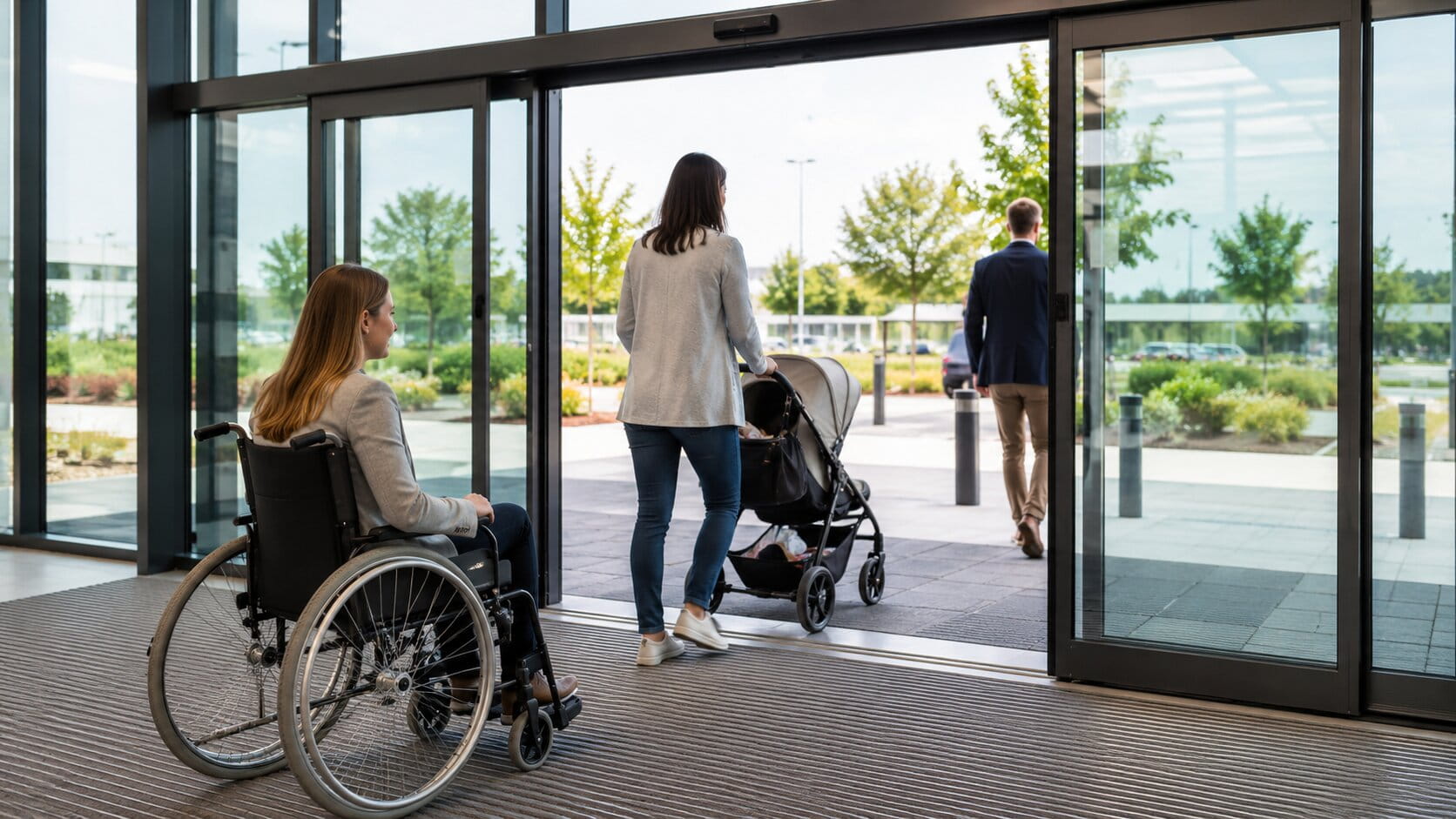
A commercial entrance should be easy to approach, identify and use. That means considering thresholds, opening width, manoeuvring space, visibility, door weight, activation controls and the route into the building.
Automatic entrance doors can improve accessibility because users do not need to push or pull a heavy door. This can make a real difference for wheelchair users, older visitors, parents with prams and customers carrying bags.
Glass doors also need careful thought. Manifestation, contrast and visibility help people recognise the presence of glass and move safely through the entrance.
Consider fire safety and emergency escape
A commercial entrance may form part of the building’s wider safety strategy.
If the entrance is on an escape route, the door must allow people to leave safely in an emergency. This can affect the opening direction, locking system, access control, panic hardware and fire alarm integration.
For automatic entrance doors, ask what happens during a power failure or fire alarm activation. Can people still exit safely? Is there a manual override? Does the system fail safe or fail secure?
These details should be agreed before installation. A door can be secure during normal opening hours, but it must still support safe evacuation when required.
Decide on glass, framing and visual impact
For many businesses, the entrance is part of the brand. It sets expectations before a customer speaks to anyone inside.
A glass entrance can make a premises feel brighter, more open and more professional. However, a glass entrance door commercial specification still needs to consider safety, durability, weather performance and security.
Think about whether you want a framed or frameless look, how much visibility is needed and whether the entrance forms part of a wider shopfront. Toughened, laminated or specialist glazing may be suitable depending on the site.
If your entrance is part of a larger façade upgrade, it makes sense to review glass shop fronts as part of the same conversation. This helps ensure the door, glazing, frame finish, branding and access system work together.
Build security and access control into the brief
Security is easier to plan before installation than to add later.
A commercial entrance may need to welcome customers during the day, restrict staff-only areas, protect the premises after hours and still allow safe escape in an emergency. These needs can affect the door, frame, lock, wiring and automation.
Access control could include a keypad, fob reader, card system, intercom, reception release or time-controlled locking. Some premises may also need CCTV, alarms, laminated glass, stronger framing or shutters.
Tell your installer how the entrance should work when the building is open, closed and in emergency mode. That gives them a much clearer basis for pricing.
Think about maintenance and lifetime value
The cheapest quote is not always the best value.
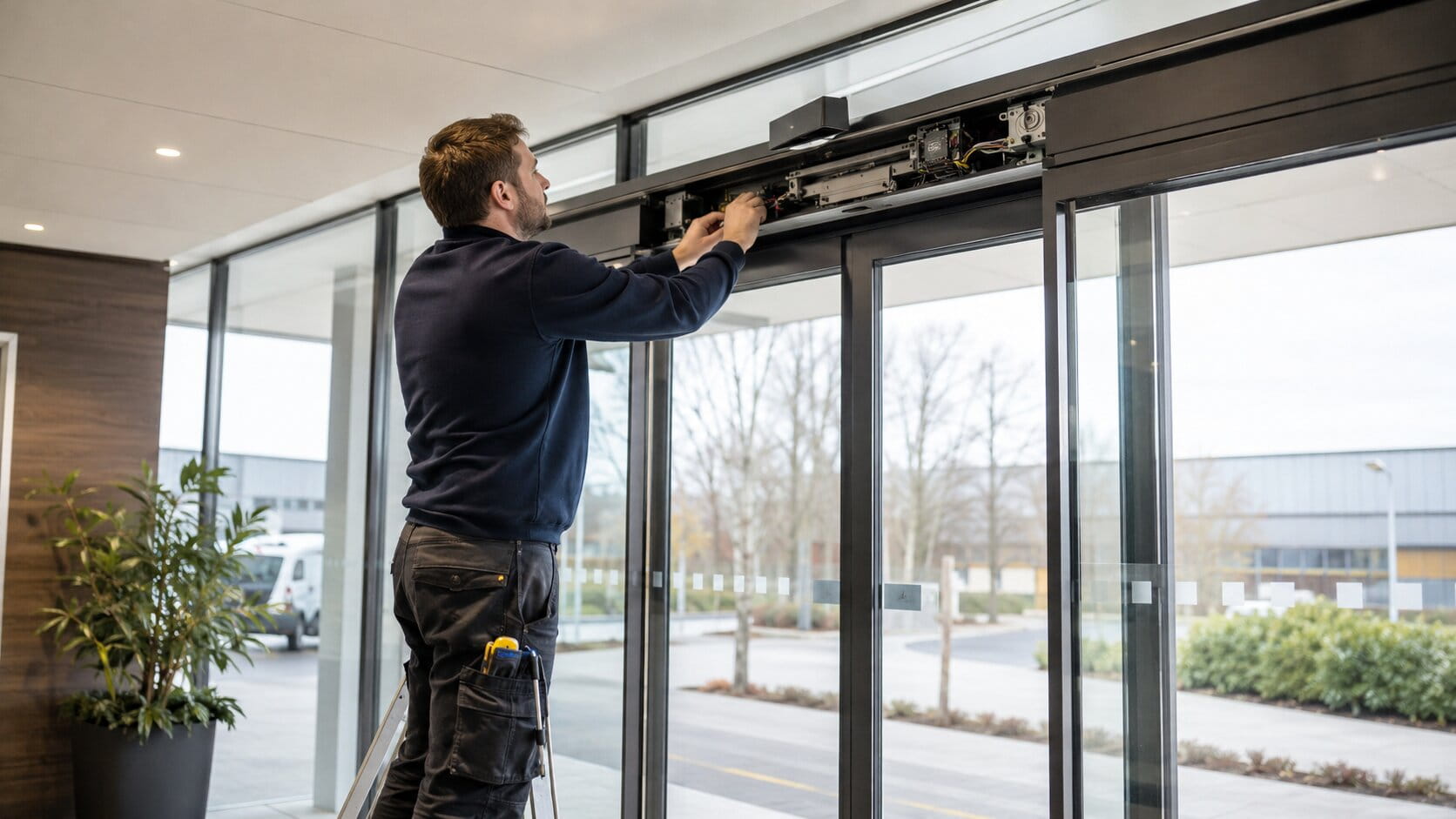
Commercial entrance doors are used every day, often hundreds or thousands of times. If they are poorly specified, badly installed or not maintained, they can become noisy, slow, misaligned or unreliable.
This is especially important for automatic entrance doors, which include moving parts, sensors and control systems. Planned maintenance helps keep them safe, smooth and reliable. If your premises depends on automatic doors, review automatic doors maintenance before choosing a system.
What to send before requesting a quote
To get a useful quote, give the installer a clear starting point:
- Photos of the entrance inside and outside
- Approximate opening width and height
- Site address and building type
- Expected footfall and main users
- Manual or automatic door preference
- Access, fire safety or security requirements
- Glazing, framing or branding preferences
- Preferred installation timeframe
This helps suppliers quote accurately and reduces the risk of hidden extras.
FAQs about commercial entrance doors
Are automatic entrance doors suitable for small businesses?
Yes, they can be, especially where accessibility, footfall or hands-free access is important. The available space, power supply, safety requirements and maintenance budget should all be considered.
What affects commercial entrance installation costs?
Cost depends on the door type, size, glazing, frame system, automation, access control, safety sensors, electrical work and site conditions.
Can a glass commercial entrance be secure?
Yes. Security can be improved with suitable glass, framing, locking, access control and after-hours protection.
Conclusion: plan first, quote second
A new commercial entrance is an investment in how your premises looks, works and welcomes people. The right doors can improve access, reduce bottlenecks, support security and create a stronger first impression.
Before requesting a quote, define how the entrance will be used, whether automatic operation is needed, how access and fire safety will be handled, and what maintenance support is required.

With over 30 years of experience, Page Electric has grown into one of Ireland’s leading providers of door and shopfront solutions. We pride ourselves on rapid quotations, fast turnaround times, and a highly skilled team. At Page Electric, we believe in reliability, craftsmanship, and long-standing relationships.